Google’s pilot lets Gemini handle some simple business calls for users. For now, it is limited to Pixel 11 owners in the United States who pay for a Gemini subscription. Users can monitor the call and take over.
STRICT, CONTEXTUAL, and NONE—called OFF in Chat V2—change the safety instructions included in a request. They do not certify an application or show how a workflow with documents or tools will behave. This guide explains their scope and proposes a testing protocol.
Google announces Live Avatar for Gemini Enterprise: a visual representation that accompanies conversations and synchronizes its movements with speech. Availability, performance, and supported modalities have limits worth keeping in mind.
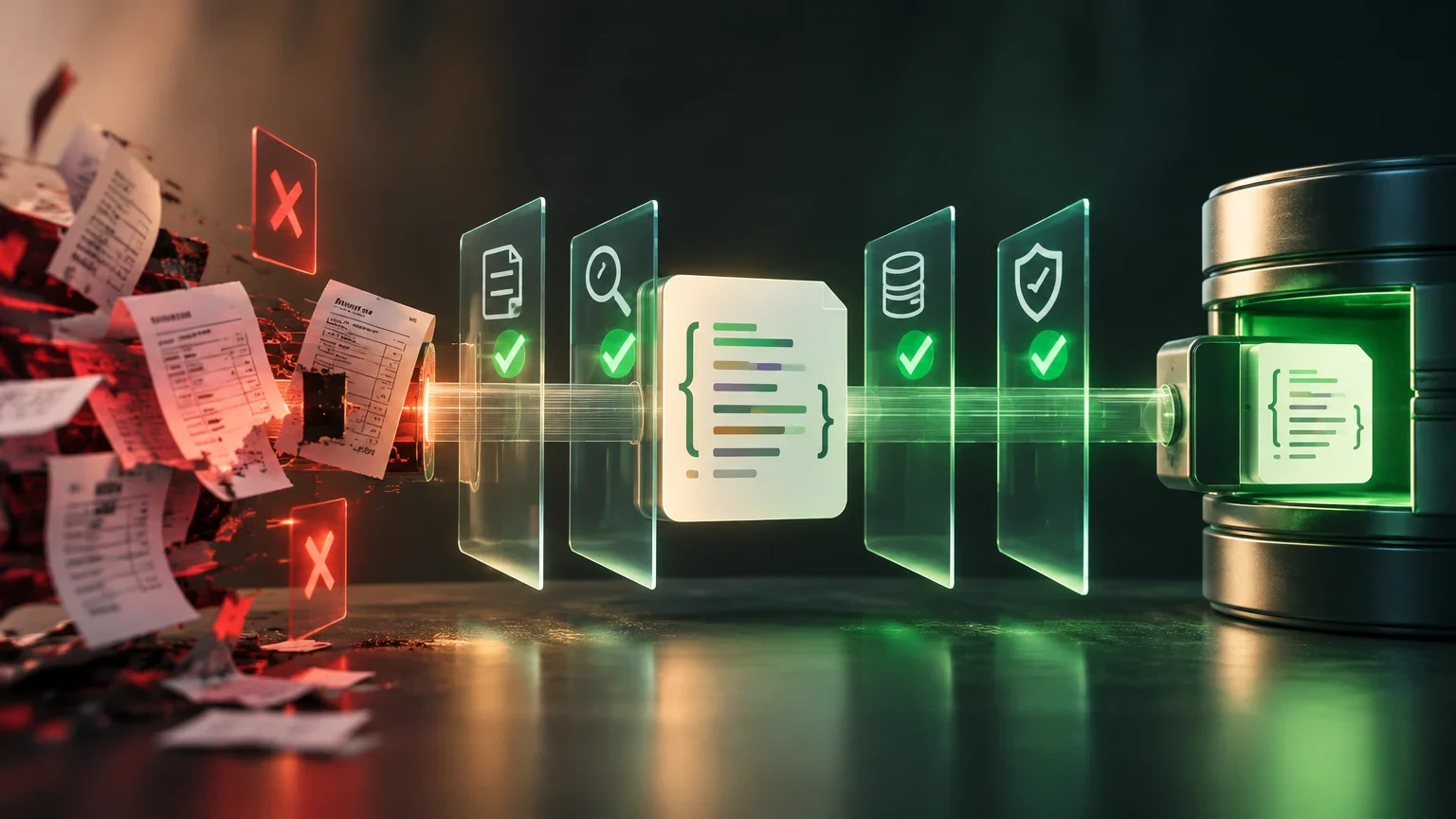
A JSON response can match a schema and still be false, incomplete, or unsuitable for the workflow that receives it. This guide explains how to validate format, meaning, evidence, and permissions separately, using examples involving invoices, support tickets, and actions that require approval.
Embed 4 can generate representations for text, images, and mixed inputs. But adding it to an existing index requires recalculating and validating vectors, queries, and configuration. Its specifications alone do not show that retrieval will improve on a particular corpus.
A list of capabilities does not show that they work well in combination. This protocol proposes testing Command A+ with images, requests in multiple languages, and simulated tools, while recording successes, errors, latency, and cost.
The benchmark measures whether agents can predict how changes to workflow components affect outcomes. Its results describe performance on specific tasks, not a general ability to do science.
At Made on YouTube, the company announced AI-assisted feedback on drafts and conversational editing for Shorts. YouTube lists some of the editing actions, but has not specified regions or a rollout schedule.
OpenAI documentation sets a retirement date for the Videos API and the Sora 2 and Sora 2 Pro models, and does not list a replacement. Teams can start by inventorying their dependencies and backing up assets they have already downloaded; the available sources do not clarify what will happen to jobs and metadata after shutdown.
The benchmark compares computer-use agents across nine marketplace environments, with and without steering mechanisms. Its results point to a sharp drop in selecting the product deemed optimal for the user, but do not show that the same effect occurs in real stores.
The preprint describes an adaptive red-teaming method that uses the results of each test to choose what to explore next. Its authors report finding more failures than static replay of seed tests across three evaluation families, but the summary does not quantify the advantage or show that it translates into the frequency of real-world incidents.
Meta plans to bring its Muse agent to smart glasses in the coming months and has unveiled Muse Charm, a pocket-sized device designed for interacting with it. The launch date, markets, compatibility and several operating details remain unclear.