An operational guide to auditing the real costs of AesCode 32B, distinguishing between technical specifications confirmed by Microsoft and economic variables that require internal estimation, given that no public API pricing exists for this model.
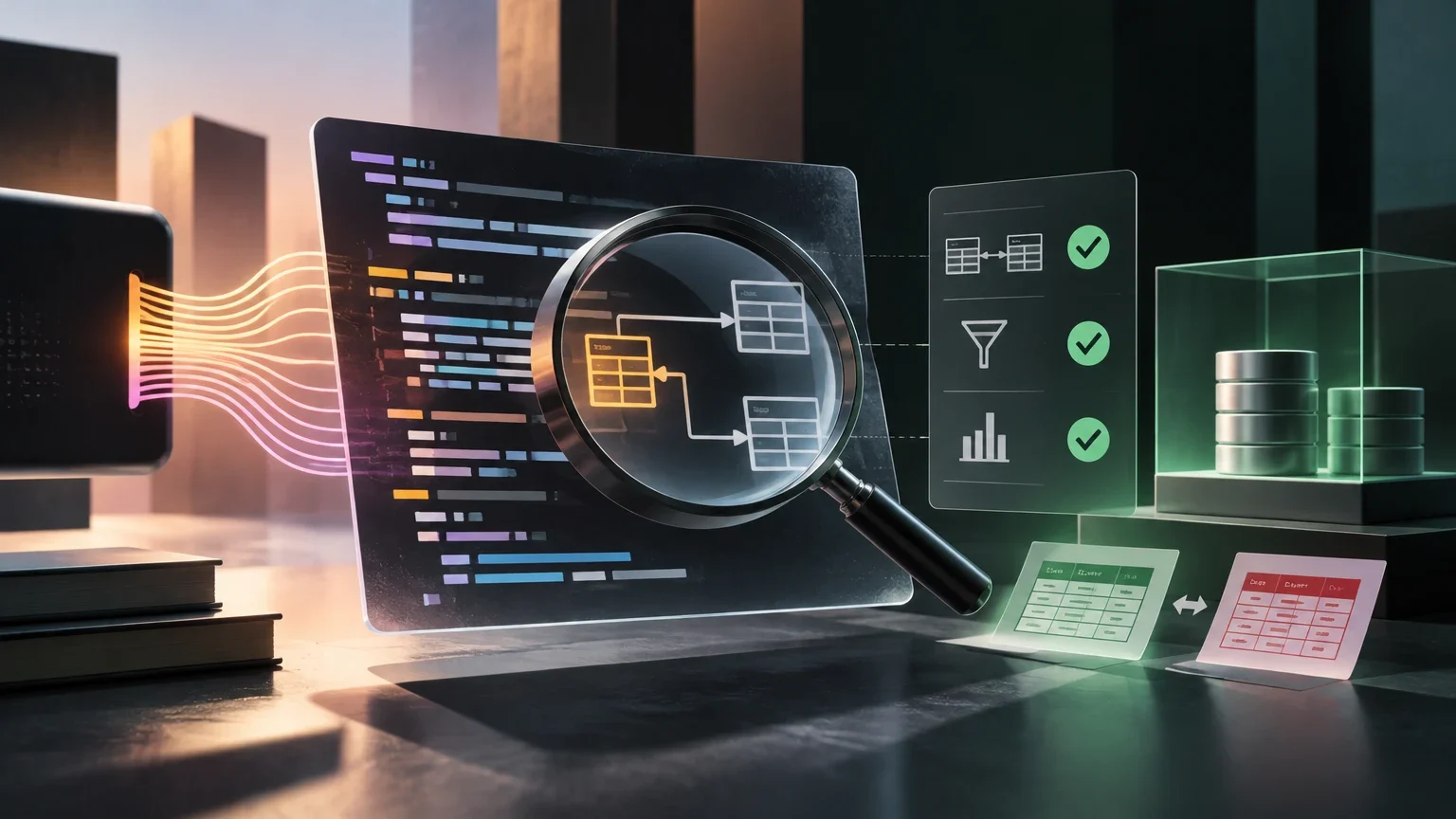
A query can run without errors and still calculate a metric incorrectly. This protocol explains how to inspect joins, filters and aggregations, test in a controlled environment, and compare results with known references.
Q4_K_M, Q5_K_M, and Q8_0 alone do not tell you how much hardware you need. Learn to estimate weight memory, calculate the KV cache, and validate a setup with task-specific speed and quality tests.
A practical guide to logging each request and its stages without indiscriminately storing sensitive data. It covers an event schema, an instrumentation example, privacy criteria, diagnostic dashboards, and a process for investigating failures and distinguishing API-reported usage from final charges.
Learn how to distinguish finding comments, discovering themes, applying known categories, and drafting summaries—then choose a suitable technical approach based on your data, constraints, and tolerance for errors.
V4.1-Flash-1017 improves on DeepSeek’s reported results for agentic tasks and lowers the observed cost per task in its DeepSWE evaluation. The company has also made Search and Fetch available through APIs; performance comparisons for the new checkpoint are, for now, internal evaluations.
The company has granted six researchers from the non-profit organization METR permissions equivalent to its own employees, marking a precedent in external verification of AI risks.
A decision guide for choosing between AI assistants, BI, and code based on the specific analytical task, with verification checklists for data integrity, privacy, and total cost.
This guide offers a structured way to examine the evidence chain in AI research. It shows how to distinguish direct observations from implicit assumptions and interpretive conclusions, so readers can identify which claims the data actually support and which depend on premises that may not hold.
The supplied documentation shows figures of $4 and $20 for Claude Opus 5.5, but the available evidence does not confirm the billing unit. This guide provides a formula, conditional scenarios, and a method for measuring your workload without treating cache or batch-processing rates as verified.
A methodological guide to distinguishing experimental robustness from generalization and reproducibility, reconstructing test conditions, and drawing conclusions proportionate to the evidence observed in AI research.