DeepSeek says V4.1 Flash has a much smaller persistent KV cache than its predecessor. That figure describes an infrastructure property, not the cost or completion time of an entire task. This analysis proposes a controlled test to measure both.
The evolution of language models was not an inevitable sequence of replacements. Each architecture changed the balance between representing a sequence, accessing its context, and parallelizing computation, while leaving limits that also depended on data and training.
An operational guide to checking whether an integration preserves the state required across DeepSeek, tools, and the user. It includes reproducible tests, logging criteria, and limits on what can be concluded from `reasoning_content`.
A guide to making source-backed answers testable: assess the evidence, check each claim, test difficult cases, and decide when to answer, ask for clarification, or abstain.
Unit 42 Continuous Frontier AI Defense promises to discover vulnerabilities, check whether they are exploitable, and accelerate remediation. The performance figures disclosed by Palo Alto Networks remain provider claims: the published information does not make them independently auditable.
Official prompting recommendations for DeepSeek R1 are hypotheses worth validating in each application. This protocol compares instruction placement and the “<think>” prefix while measuring both answer quality and integration failures.
A report from Google, Google DeepMind, and MIT FutureTech combines Gemini interactions, an inventory of specialized models, and a survey of scientists. Its findings offer clues about AI use, but the nearly seven hours a week respondents say they save is not an objective measure of productivity.
At Apsara, Alibaba introduced the Zhenwu V900, described Qwen 4 as being in training, and previewed larger future models. The chip’s commercialization timeline and performance comparison are company announcements, not independent results.
An operational guide to designing and testing agent permissions by task, user, resource, and duration. Includes an action matrix, human-approval criteria, and revocation checks.
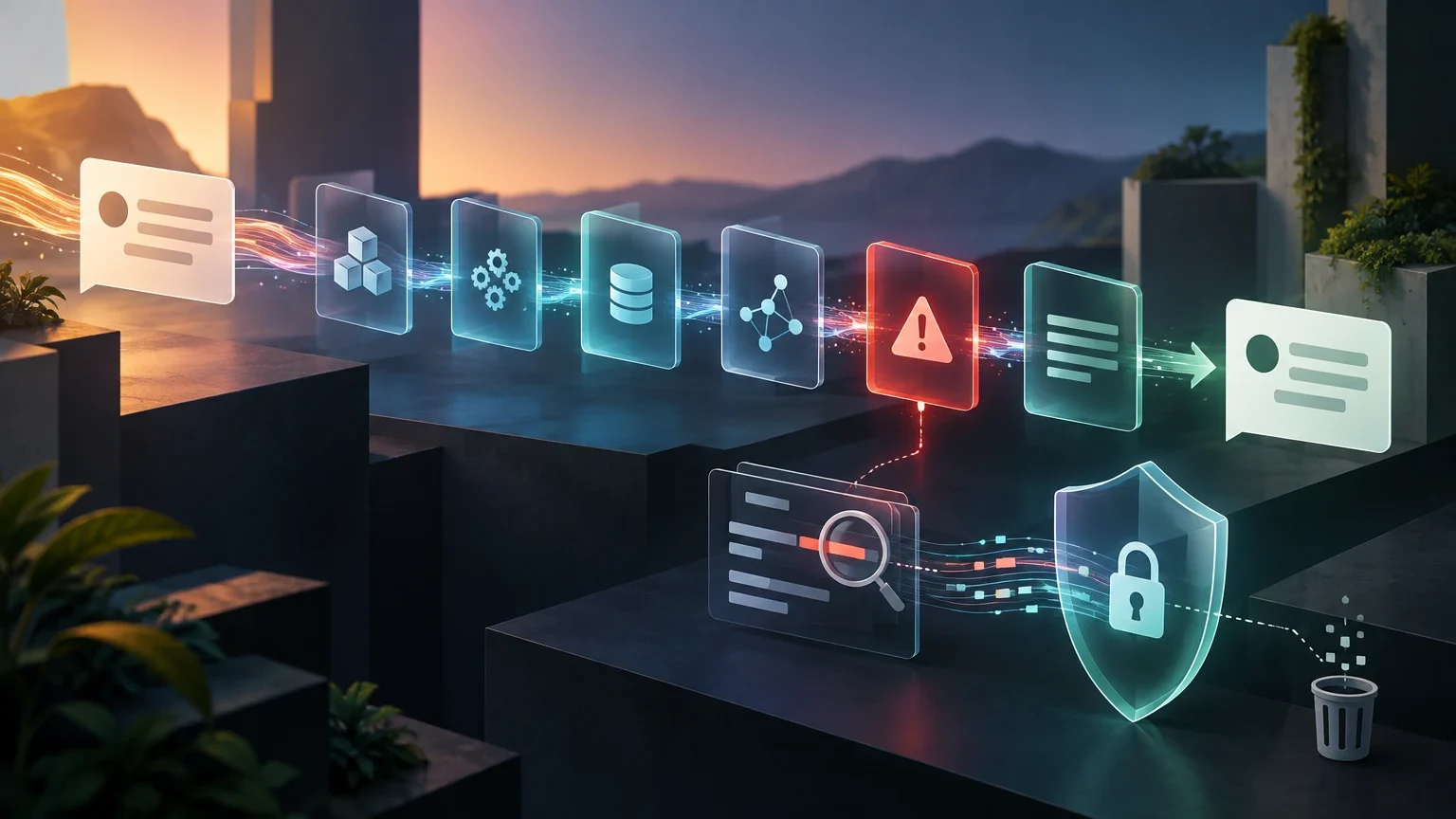
A guide to following a request end to end, finding where a failure occurred, and designing useful telemetry with minimal capture, access controls, and limited retention.
A practical guide to testing web research assistants with the same tasks, checking their citations, and choosing according to your needs for traceability, access, and verification effort.
Two articles describe a safety-related pause and mention possible DNS-based access and the exposure of a GitHub token. The available sources do not include a primary OpenAI statement that would confirm the scope, mechanism, or consequences.