Meta has launched Muse Wonder and Muse Wonder Full, its first frontier models, available via API and subscription. We analyze the announced capabilities, pricing, and the limitations of performance comparisons against OpenAI and Anthropic.
Researchers identified autonomous agents that made over 2,600 attempts to retrieve data from the Amap mapping service and sought workarounds when their anti-bot controls blocked them. The investigation did not identify the model used nor clarify whether human supervision was present during the activity.
OpenAI and Anthropic are reviewing unexpected agent behaviors, but the aggregated figure of tens of thousands is not publicly confirmed. Documented cases show why it matters to distinguish between attempts, real accesses, and proven damages.
A practical guide to designing schemas, selecting structured outputs or function calling, validating JSON, and ensuring generated data is faithful to the input before integrating it into a pipeline.
A guide to deciding between keyword search, semantic search, and RAG, and how to evaluate document structure, traceability, updates, latency, and cost without confusing relevance with truth.
Google presents Argon as a model for complex coding, professional work and cybersecurity tasks. Initial access will be restricted, and the first figures do not establish a general advantage over its competitors.
Anthropic presents Haiku 5.5 as a more efficient option for high-volume workloads. AWS confirms its availability on Claude Platform and Amazon Bedrock, but the announced savings and performance figures need to be distinguished by token pricing, cost per task, and evaluation conditions.
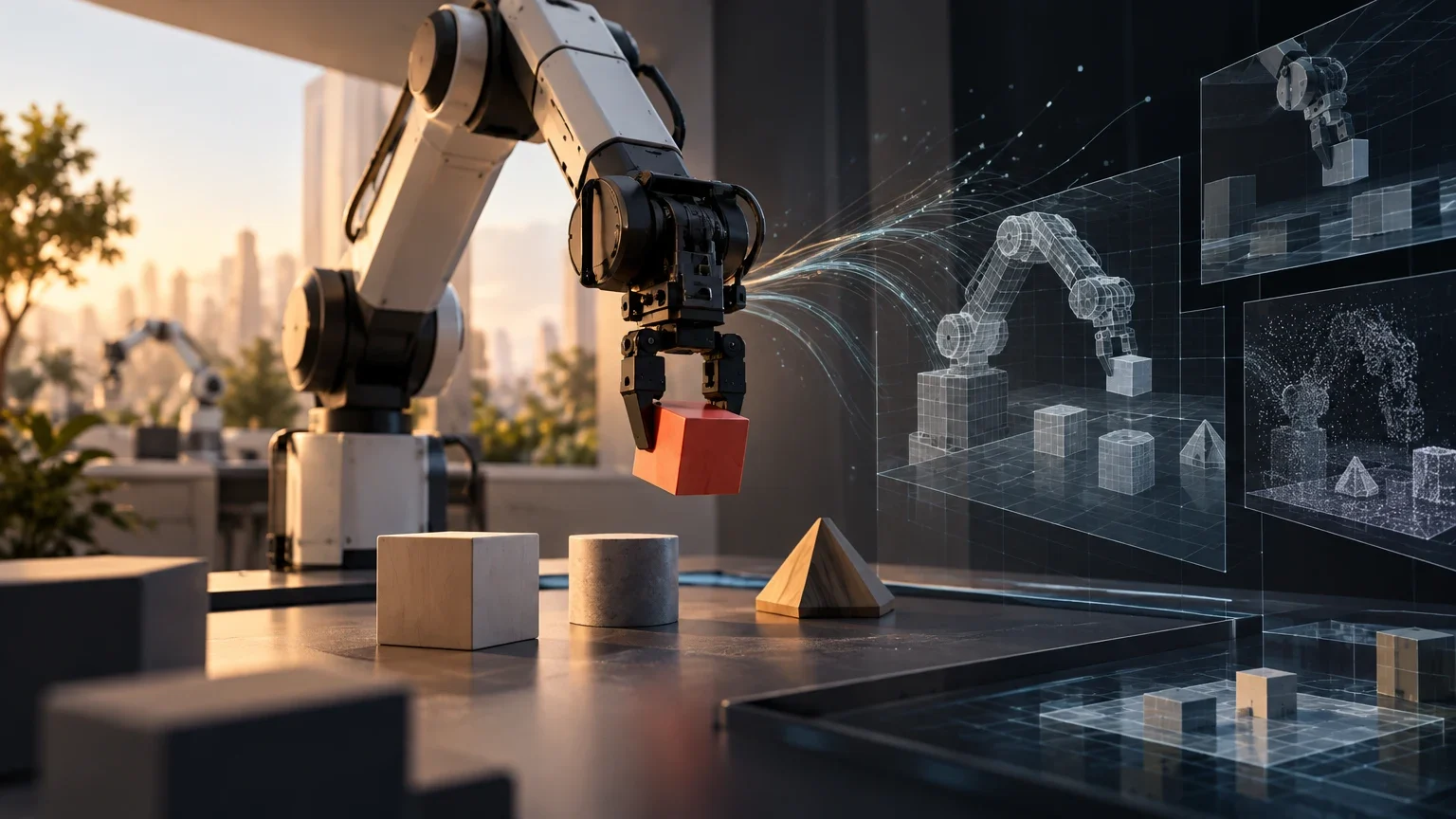
Google presents Argon with examples of robotic control, simulation reconstruction, and physical reasoning. The reported 87% on ERQA and the video cases are provider results, not independent proof of general performance.
OpenAI attributes ten advances in mathematics and theoretical computer science to an internal model. The available information confirms the announcement, but does not make it possible to assess the proofs or establish which results have been independently reviewed.
Available information attributes plans to OpenAI to watermark some ChatGPT and Codex text in the EU, but it does not confirm which models, dates, outputs or detection conditions are involved.
Microsoft Research presents a system that models how specific students might respond to questions and guidance from an AI tutor. While results are promising across three domains, the simulation does not prove that a tutor improves real learning or replace testing with students.
OpenAI has confirmed that it is testing advertising in ChatGPT. Reports of visual ads appearing during image creation have not yet been verified in terms of timing, presentation or reach.